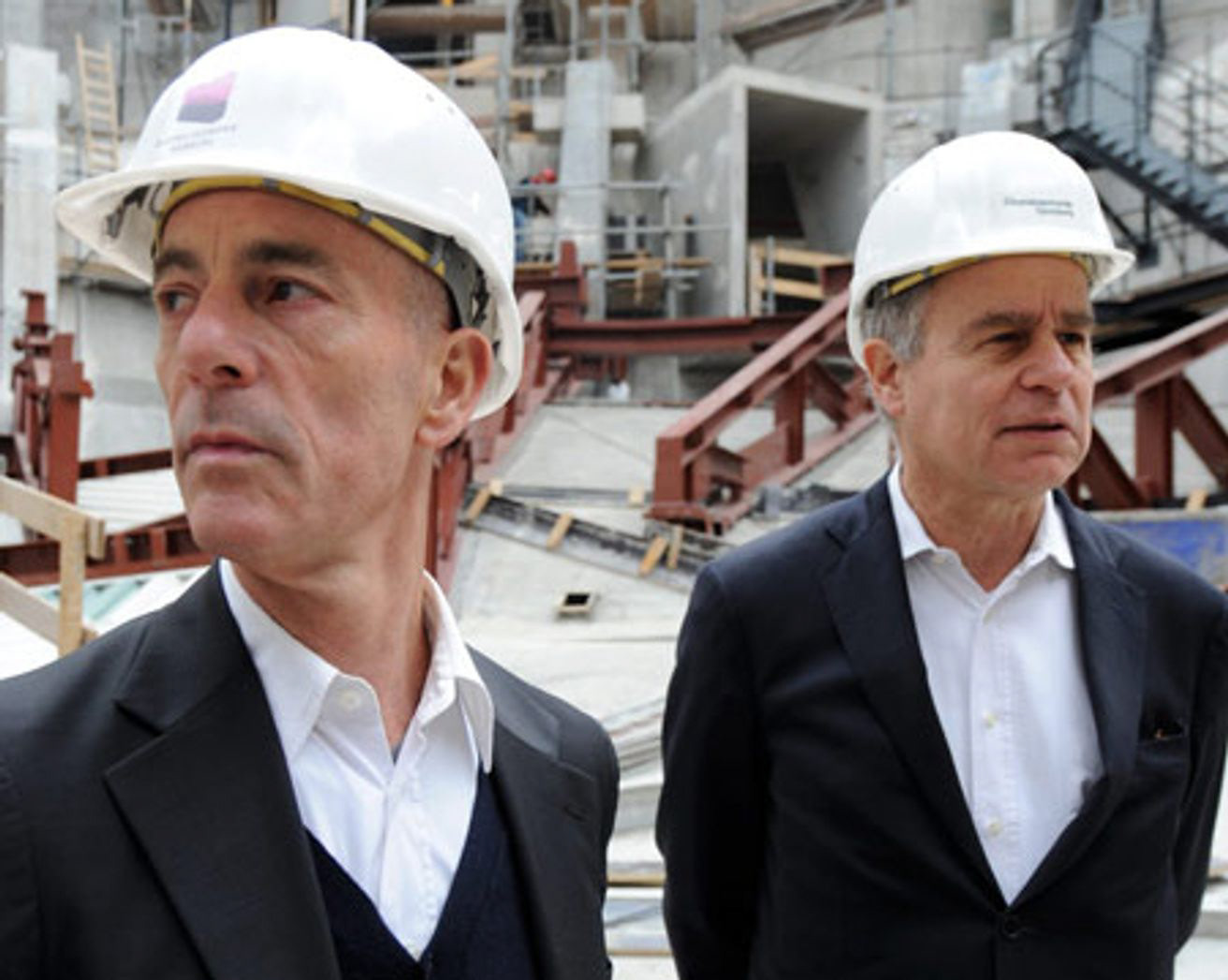
Jacques Herzog & Pierre de Meuron
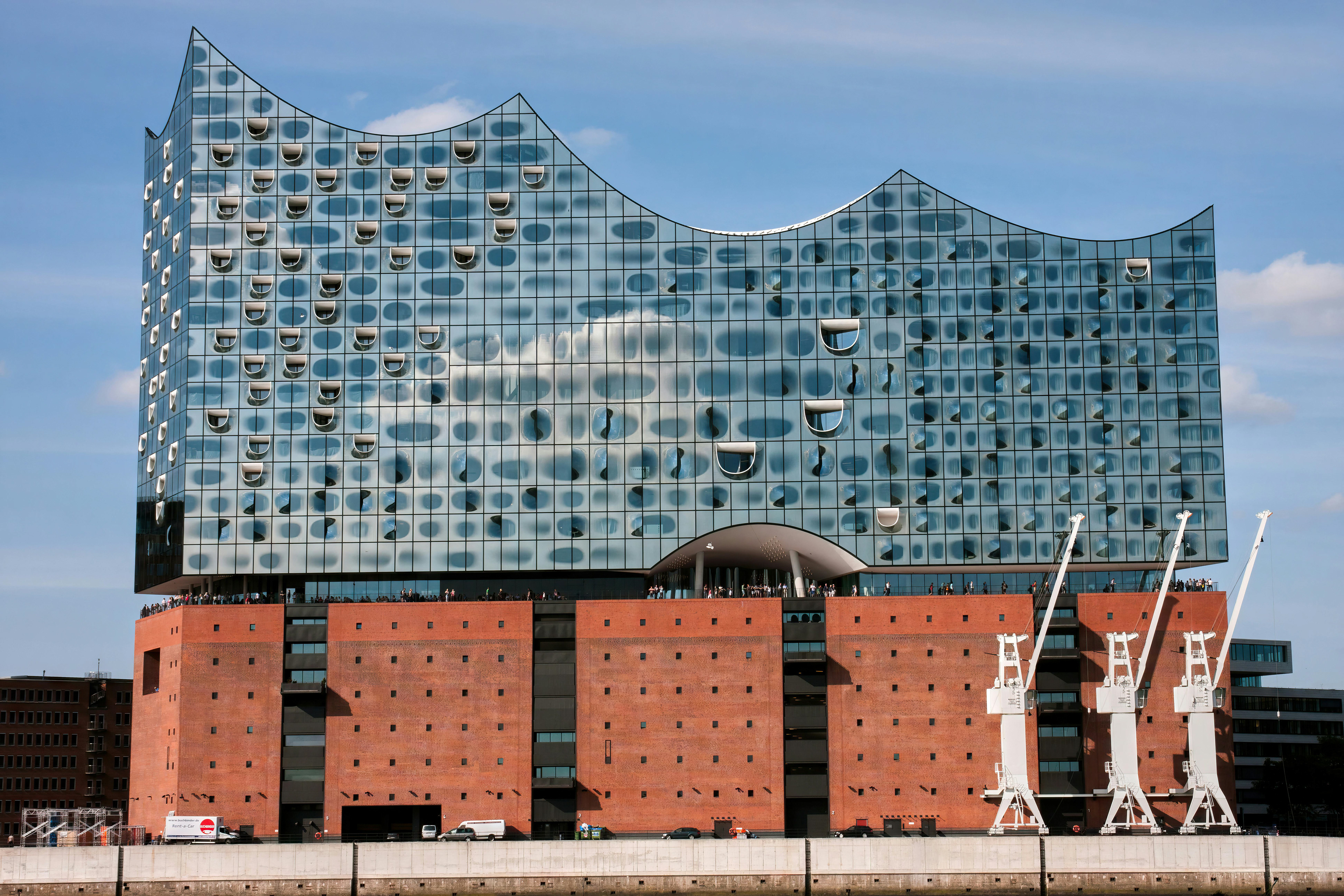
Elbphilharmonie Hamburg
Overview
Reflect the philosophy behind architect duo Jacques Herzog and Pierre de Meuron and translate it into two dimensional forms. Understand how they approached their designs, and what aspects are considered to create a three dimensional form.
Research
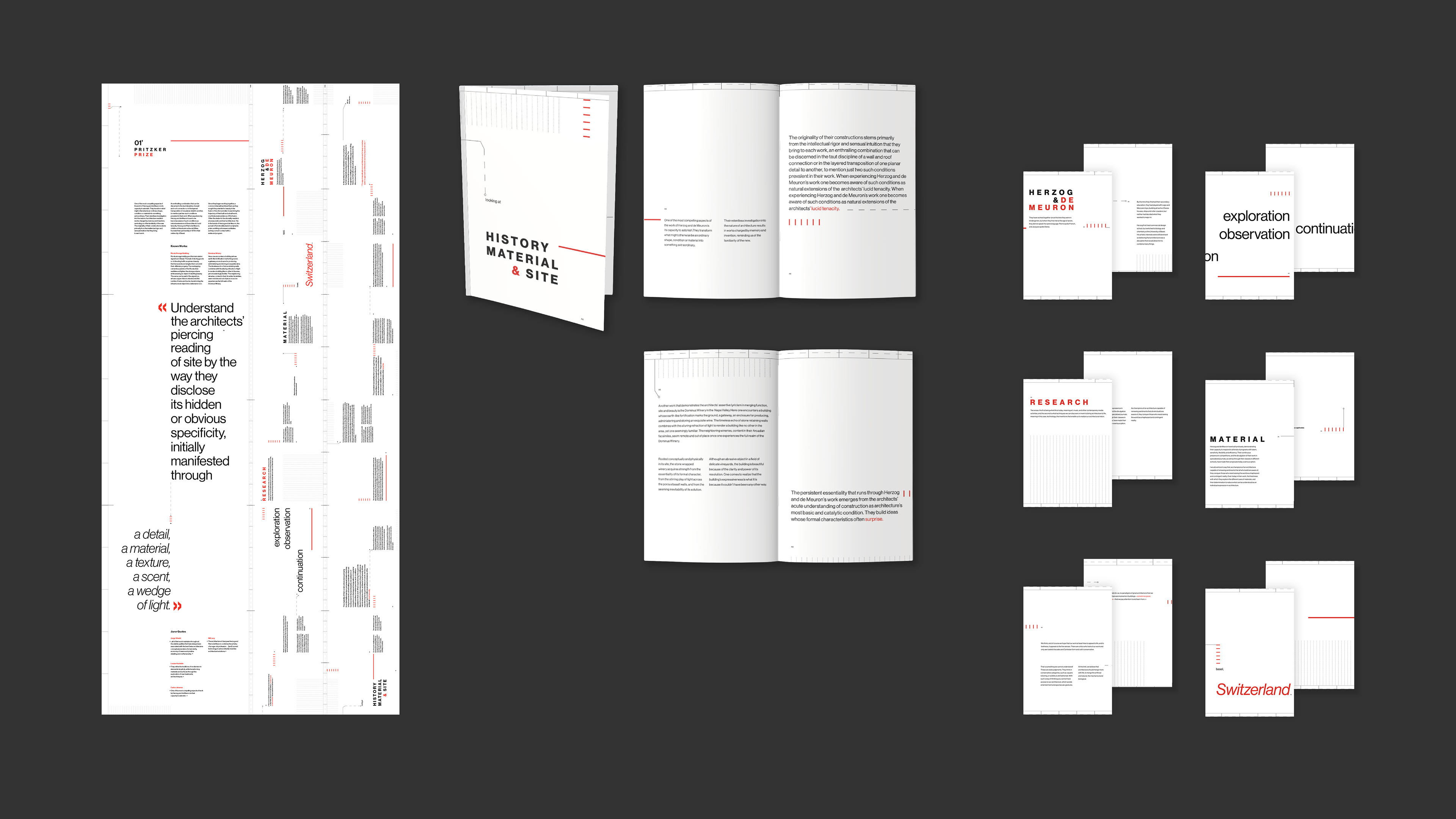
Resources ranging from documentaries, books and articles were read to gain an insight on their innovative ways, experimental tactics, and philosophy. It was understood that their philosophy relied on observations of history, surroundings, and material. With an emphasis on history, traditional European paper sizes such as A3, A5, and A6 were used to create a large grid that transforms into a poster, accordion booklet, and cards. Readers are able to cut the large paper as stated on the dash line that separates the three sections.
Furthermore, each section can be folded or cut based on the lines that run vertically over dashed horizontal lines. The main poster is folded into an A3 size and even smaller A6 size for storage, cards are A5 but are folded in half into A6, and the booklet itself can be folded into an A6 accordion. As each section can be folded down to A6, a box was designed for storing the different sections and kept together.
The colors and type was specifically chosen so the reader is able to observe the context of the design. Colors emulated traditional Swiss design, and the marks displayed small details that leads the reader to certain areas. Readers are tasked to observe the type, color and paper, to reflect how Herzog and de Meuron approach their designs– by examining the details and surroundings.